

1. City Introduction
Hsinchu, known globally as the “Silicon Valley of Taiwan,” is the heart of the world’s semiconductor industry. It is where traditional culture meets cutting-edge technology. Famously nicknamed the “Windy City” due to its strong coastal winds, Hsinchu offers a unique climate that has shaped its food culture. For ALSA attendees, Hsinchu is not just the conference venue; it is the epicenter of the “Chip War” and the engine driving Taiwan’s
2. NYCU in Hsinchu
A. The Power of Convergence
National Yang Ming Chiao Tung University (NYCU) was established in 2021 through the merger of two top-tier universities: National Yang-Ming University (famous for medicine) and National Chiao Tung University (famous for electronics and engineering). NYCU represents the perfect marriage of Bio-medicine and ICT (Information and Communication Technology), aiming to lead the future of “BioICT” and AI applications.
B. Guangfu Campus (Main Conference Venue)
Located adjacent to the Hsinchu Science Park, the Guangfu Campus is the main headquarters. It houses the School of Law (the host of ALSA 2026), the Library, and major engineering colleges. The campus features the iconic “Bamboo Lake” and lush greenery, providing a serene academic environment amidst the bustling tech city.
C. Bo-Ai Campus & The Future “Chu-Ming Smart Hospital”
Located just 10 minutes from Guangfu Campus.
The Bo-Ai Campus is the birthplace of Taiwan’s semiconductor industry. Currently, NYCU is developing the Chu-Ming Hospital here. Scheduled to open in the near future, it will be a “Digital Native” smart hospital, utilizing AI, IoT, and semiconductor technologies to revolutionize patient care. It stands as a physical testament to NYCU’s vision of “Law in the Algorithmic Age”—where technology meets humanity.
 |
 |
 |
 |
3. Top Attractions
A. Hsinchu General’s Village (Jiang Jun Cun)
Military Heritage Reimagined
A beautifully restored Japanese-era military dependents’ village, General’s Village has been transformed into a creative cultural park. The preserved wooden houses now serve as artisan shops, cafés, and exhibition spaces, blending wartime history with modern aesthetics. Strolling through the quiet lanes lined with old trees, visitors can feel the charm of 1950s Taiwan while enjoying contemporary art and craft workshops. It is one of the best-preserved military village cultural sites in northern Taiwan.
B. Hsinchu Park (Lichi Park)
Japanese Heritage by the Lake
Originally built during the Japanese colonial era, Lichi Park is a serene urban oasis featuring a picturesque Japanese-style lakeside pavilion where visitors can enjoy the tranquil water scenery. The park is also home to the Hsinchu Glass Museum, showcasing the city’s renowned glass-blowing craft heritage with stunning art installations. Nearby, the Hsinchu Zoo — one of Taiwan’s oldest — is a family-friendly destination, and the elegant Confucius Temple adds a layer of classical Chinese architectural beauty to this culturally rich area.
C. Hsinchu City Mayor Temple
The Spiritual & Culinary Heart
Established in 1748, this is the highest-ranking City Mayor Temple in Taiwan. Uniquely, the temple plaza is surrounded by a dense cluster of food stalls, making it the best place to experience traditional religious culture and local street food simultaneously.
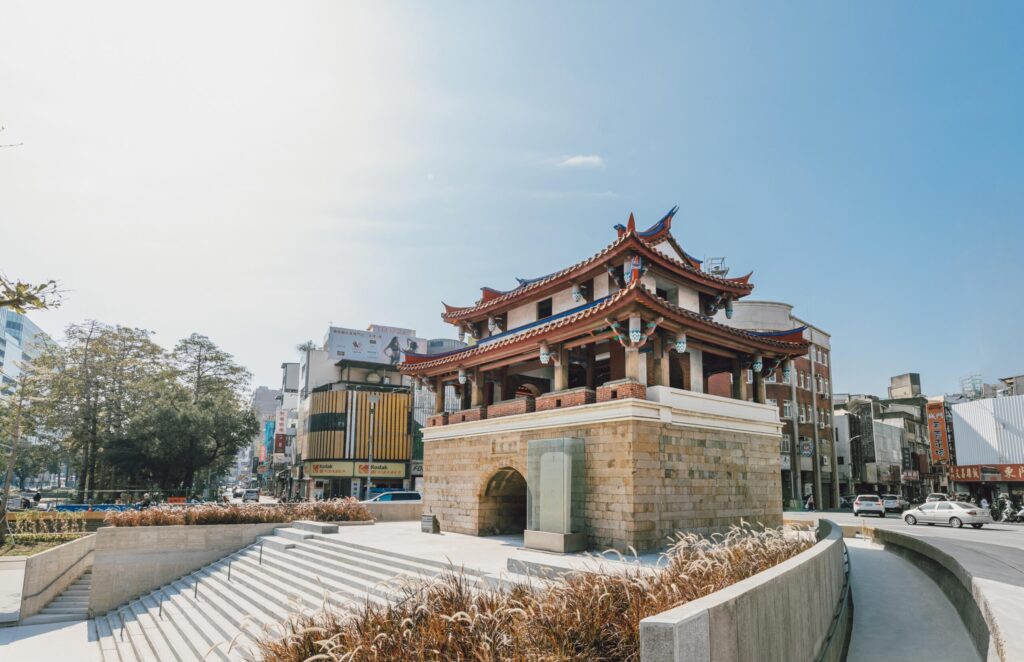
D. The East Gate (Yin Hsi Gate) & The Moat Park
Historical Walk
The East Gate is the only remaining gate of the 19th-century bamboo mud walls. The surrounding moat has been transformed into a beautiful, walkable park filled with trees and historical atmosphere, perfect for an evening stroll.
E. 17km Coastline Scenic Area
Nature & Cycling
Starting from the Nanliao Fishing Port, this dedicated bicycle path stretches along the coast, offering views of wetlands, dunes, and the famous “Fish Scale Stairway.” It is a great escape for nature lovers.
F. Nanliao Fishing Port & Fish Scale Stairway
The Coast of Wind & Kites
Known locally as the “Santorini of Hsinchu” due to its blue and white Greek-style architecture. This is the starting point of the 17km Coastline Bike Path. The Fish Scale Stairway, a series of concrete steps leading into the sea, is a popular spot for sunset photos. Don’t miss the sight of hundreds of kites flying in the strong Hsinchu wind.
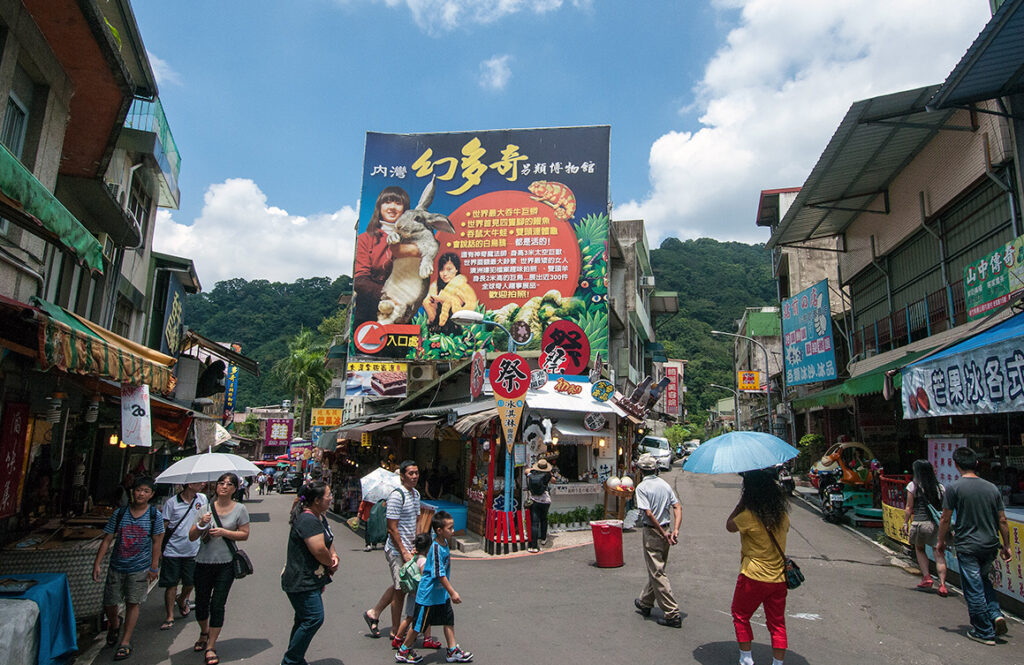
G. Neiwan Old Street
Nostalgic Railway & Mountain Town
Located at the terminus of the TRA Neiwan Branch Line, this is a vibrant Hakka mountain village. Visitors can walk across the famous Neiwan Suspension Bridge, visit the historic Neiwan Theater, and taste the unique Ginger Lily Rice Dumplings. The train ride itself offers scenic views of the lush mountains.
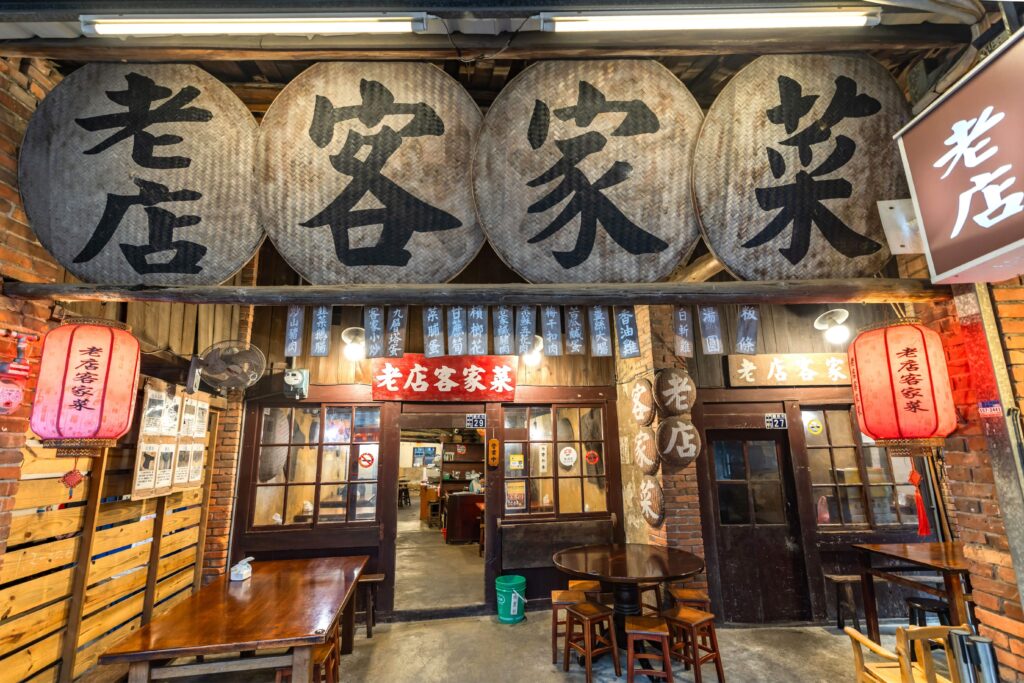
H. Beipu Old Street
Historical Hakka Heritage
A center of Hakka culture with the highest density of historical sites in the region. Must-visit spots include the Citian Temple (the town’s spiritual center) and the Jin Guang Fu Hall (a national historic monument). It is also the best place to experience the traditional DIY “Lei Cha” (Pounded Tea) activity.
 |
 |
 |
 |
 |
 |
 |
 |
4. Culinary Delights
Hsinchu’s food is defined by its Hakka heritage and the “Wind.”
A. Hsinchu Rice Noodles (Mifen)
The Windy City Special
Thanks to the strong, dry winds of Hsinchu, the rice noodles here are dried quickly, resulting in a unique, springy texture. They are typically stir-fried with mushrooms, dried shrimp, and minced pork.
B. Pork Meatballs (Gongwan)
Bouncy & Juicy
Hsinchu meatballs are famous nationwide for their incredible elasticity and juicy flavor. They are usually served in a light broth with celery and coriander.
C. Hakka Lei Cha (Pounded Tea)
DIY Tea Experience
A traditional Hakka drink made by grinding tea leaves, peanuts, sesame, and pumpkin seeds into a paste, then brewing it with hot water. It is rich, nutty, and healthy.
D. Duck Meat Rice
Temple Night Market Staple
Located near the City God Temple, Miao Kou Duck Rice is a must-try. The rice is topped with tender smoked duck and drizzled with flavorful duck oil.

(AI-generated)
Hsinchu City’s Photo Credits: Images courtesy of Hsinchu City Government.